
Sports Photography: Ultimate Guide to Capture Action, Gear & Tips
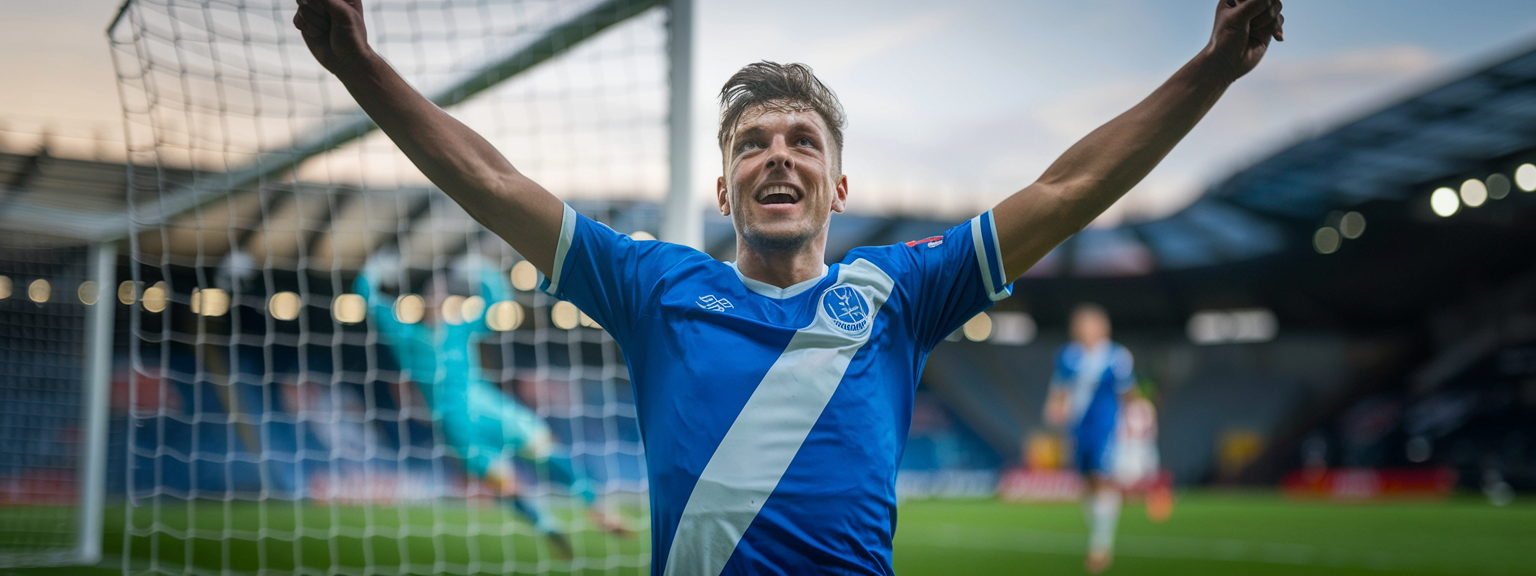
📝 Step-by-Step Guide: Sports Photography Workflow
Introduction
Sports Photography is a demanding discipline that combines technical precision with quick decision-making. In this step-by-step workflow I present an ordered approach for planning, shooting, and delivering consistent action photography. As a result, you will minimize missed moments and produce images with impact.
1. Pre-Event Planning
- Scout the venue and note lighting conditions; stadium lights and overcast skies require different ISO strategies.
- Learn the sport’s rhythm to predict peak moments — set pieces in soccer, breakaways in hockey, and overtakes in motorsport.
- Confirm access, allowed equipment, and any restrictions on flash or tripods.
- Prepare two camera bodies if possible: one with a 70–200mm f/2.8 and another with 24–70mm or a prime for tight spaces.
2. Gear and Setup
Choose gear that supports fast autofocus, high frame rates, and good high ISO performance. For most assignments a telephoto lens such as a 70–200mm f/2.8 serves as a workhorse. In addition, longer primes (300mm–600mm) are useful for large fields or distant action.
3. Camera Settings — Core Triangle
- Shutter speed: Start at 1/1000s for most fast action; slower speeds (1/125–1/250s) are for panning technique and motion blur.
- Aperture: Use wide apertures (f/2.8–f/4) to isolate subjects and allow faster shutter speeds; watch depth of field with long telephoto lens.
- ISO: Set Auto ISO with sensible caps (e.g., 100–6400); increase only as needed to preserve shutter speed.
- Autofocus: Use Continuous AF (AF-C / AI Servo) and choose single-point or small-zone AF for accurate focus on faces or the ball.
- Drive mode: Continuous high (burst mode) maximizes your chance of capturing the decisive frame.
4. Positioning and Framing
Position yourself where the action concentrates. For example, near the penalty area in soccer or at turn exits in motorsport. Therefore, anticipate movement, and move to reduce distracting backgrounds. When possible, align the light to create catchlights in the athlete’s eyes.
5. Shooting Techniques
- Burst mode mastery: Hold the shutter through the entire action. You will capture the lead-up and the peak moment.
- Panning technique: Use slower shutter speeds to blur the background while keeping the subject relatively sharp; practice on cyclists or runners first.
- Pre-focus: For penalties or set pieces, pre-focus on the expected point of action to reduce acquisition lag.
6. Post-Event Workflow
Immediately back up your cards to two drives. Next, cull ruthlessly to the top 1–5%. Then process RAW files, correct exposure and white balance, reduce noise selectively, and sharpen key areas. Finally, export JPEGs with appropriate color profiles and deliverables for web or print.
📌 Practical Applications: Sports Photography Uses
Editorial and News
Sports Photography for editorial contexts requires quick turnaround and fidelity. Editors need crisp peak-action frames that identify players and moments. Therefore, file naming and accurate captions matter. In addition, include metadata and player names where possible.
Team and Club Promotion
For club promotion use a mix of action photography and posed hero portraits. Use a telephoto lens to isolate athletes, and shoot with shallow depth of field to emphasize brand elements such as jerseys and logos.
Sponsorship & Commercial Use
Commercial shoots often require controlled lighting. When permitted, integrate strobes or off-camera flash to freeze motion and highlight sponsor logos. Plan compositions to ensure brand placement is clear and unobstructed.
Athlete Portfolios & Social Media
Athletes need action shots that demonstrate skill and emotion. Deliver a range of images: tight telephoto action, wide context shots, and vertical crops for social platforms. Also, provide high-resolution files for press kits and web-size variants for quick posting.
Which application of sports photography would most improve your portfolio — editorial action shots, club hero images, or athlete portraits?
💡 Tips & Tricks: Sports Photography Settings
Shutter Speed & Motion Control
Shutter speed is the primary control for freezing action. For most team sports set 1/500s–1/2000s. However, for panning choose 1/60s–1/250s depending on subject speed. As a rule, match shutter to both subject velocity and focal length.
Aperture Strategies
Use wide apertures like f/2.8 to isolate subjects with a telephoto lens. However, be mindful that at long focal lengths depth of field is shallow. Therefore, position AF point on eyes or the ball to maintain critical sharpness.
ISO and Noise Management
Modern cameras handle high ISO well, but keep noise in check by exposing to the right (ETTR) without clipping highlights. In addition, use selective noise reduction during RAW processing to preserve texture.
Autofocus & Burst Mode
Use AF-C (continuous) with a small AF zone for predictable tracking. Burst mode (high fps) helps capture peak expressions and tiny positional differences. For example, shoot 10–20 fps on decisive plays and choose the best frame in post.
Practice these settings on local matches this week to build confidence and create a consistent shoot-day routine.
Composition & Background Control
- Use telephoto lens compression to remove distracting elements.
- Aim for diagonal lines and dynamic angles to convey motion.
- Include context shots to tell the full story of the event.
📸 Sample Scenario
Local Soccer Match — Full Plan
This sample scenario demonstrates applying the workflow. Arrive two hours early to scout and confirm locations. Use a 70–200mm f/2.8 on a monopod for sideline action and a 24–70mm on a second body for wide storytelling images. Therefore, you cover both tight action and crowd reaction.
Warm-Up and First Half
- Shoot warm-ups to test AF and exposure. For daylight set 1/1000s, f/4, ISO 100–400.
- During play, use burst mode during shots on goal or headers. Anticipation is critical.
Second Half and Post-Match
Move to near-goal positions for late-game decisive moments. After the match, immediately back up to two drives. Then select top images to send to organizers within an hour if requested.
✅ Key Do’s for Effective Usage
Essential Practices
- Do use burst mode during decisive plays and review sequences carefully.
- Do learn panning technique to convey speed and motion when appropriate.
- Do shoot RAW to maximize post-processing flexibility and color correction for stadium lighting.
- Do protect gear with rain covers and secure permissions for commercial use.
❌ Common Mistakes to Avoid
Frequent Errors
- Underestimating shutter speed — resulting in motion blur.
- Over-reliance on high ISO without exposure discipline — which increases noise.
- Poor AF point selection — broad AF areas can lock onto the wrong subject.
- Ignoring backgrounds — clutter can ruin a technically correct image.
🔄 Troubleshooting & FAQs
Troubleshooting Common Problems
Problem: Images are soft despite fast shutter speeds. Check AF mode and AF point selection. In addition, verify lens calibration and stabilize with a monopod. Also, ensure shutter speed matches focal length — for example, a 400mm lens typically needs 1/400s or faster.
Problem: Noisy images at high ISO. Expose as much as possible without clipping highlights, and apply selective noise reduction in Lightroom or Topaz DeNoise AI. For example, use ETTR to reduce luminance noise and then recover shadows carefully.
Problem: Autofocus hunting or missed frames. Update camera and lens firmware, and switch AF area modes — zone AF often outperforms full-area AF in chaotic scenes. Back-button focus can separate focusing from the shutter and improve responsiveness.
Frequently Asked Questions
Q: What shutter speed do I need for sports photography?
A: It depends on the sport. Use 1/500s–1/2000s for most team sports and 1/1000s or faster for motorsport and sprinting. For panning, reduce to 1/60–1/250s.
Q: Which lens is best for sports photography?
A: A 70–200mm f/2.8 is the most versatile. For stadiums and distant play, use 300mm–600mm primes. Indoor sports benefit from fast primes like 35mm f/1.4 or 85mm f/1.8.
Q: How can I freeze action with low light?
A: Use the widest aperture available, raise ISO, and choose a body with excellent high-ISO performance. In addition, consider controlled lighting when permitted.
Q: How important is post-processing in sports photography?
A: Very important. RAW processing corrects exposure, white balance, and noise. Use selective sharpening on eyes and subject edges, and crop for impact.
Q: What are the best AI tools for productivity?
A: Adobe Lightroom with AI Enhance, Topaz DeNoise AI and Sharpen AI, Luminar Neo, and ImagenAI for batch edits are effective. However, always review AI edits manually for authenticity and adjust where needed.
🖼️ Bringing It All Together
Summary & Next Steps
Sports Photography rewards consistent practice and methodical preparation. Prioritize shutter speed and autofocus, choose appropriate lenses, and refine your shooting positions. For example, practicing panning and AF tracking on local events will drastically improve your accuracy in competitive assignments.
Ready to improve your sports photography? Book a hands-on workshop or submit three RAW files for a focused critique — we’ll provide tailored settings and edit suggestions.
Use the practice routine provided earlier: week-by-week drills on shutter speed, autofocus tracking, and night shooting with high ISO. As you progress, create a portfolio that demonstrates technical range and storytelling ability. In addition, maintain a clean culling workflow and ensure accurate metadata for every delivered image.
Sports Photography combines technique, anticipation, and storytelling. By mastering shutter speed, panning technique, burst mode, telephoto lens handling, and high ISO management you will produce compelling images that capture the drama of sport.
![[Photographer capturing sunrise landscape during a travel photography trip with a mirrorless camera]](https://lenslesson.com/wp-content/uploads/2025/12/travel-photography-sunrise-shot-essentials.png "[Travel photography sunrise capture]")
![[Close-up of a photographer adjusting camera settings - Photo Tips for sharper shots]](https://lenslesson.com/wp-content/uploads/2025/12/photo-tips-better-photos-smartphone-composition.png "[Photo Tips Sharper Shots]")
![[Photographer capturing a candid moment on a busy city sidewalk — street photography scene]](https://lenslesson.com/wp-content/uploads/2025/12/street-photography-candid-urban-moment.png "[Urban Street Photography Moment]")
![[Sunrise over a mountain valley with wildflowers in the foreground — landscape photography showing golden-hour light and wide-angle composition.]](https://lenslesson.com/wp-content/uploads/2025/12/landscape-photography-breathtaking-sunrise-scene.png "[Breathtaking Landscape Photography Sunrise]")