Creative Inspiration Daily: 10 Simple Practices to Spark Ideas Every Morning
📝 Step-by-Step Guide: Creative Inspiration Daily
Introduction
Creative inspiration daily is a practical, repeatable approach for photographers and visual creators who need reliable idea generation each morning. By establishing a short, reproducible inspiration routine, you convert scattered impulses into organized creative output. This guide provides a clear eight-step routine, daily creative prompts, and actionable techniques you can apply whether you are finding inspiration daily for personal work, teaching, or client projects.
Overview: The 8-Step Morning Inspiration Routine
- 1. Wake, hydrate, breathe (5 minutes)
- 2. Quick visual warm-up (10 minutes)
- 3. Daily creative prompts selection (5 minutes)
- 4. 30–60 minute focused capture session (photo walk or staged shoot)
- 5. Rapid review and idea capture (10 minutes)
- 6. Creative stretch: edit, sketch, or write (20–40 minutes)
- 7. Archive & tag ideas (5–10 minutes)
- 8. Plan a micro-action for later (5 minutes)
Step 1 — Wake, Hydrate, Breathe (5 minutes)
Begin each day with a short physiological ritual. Drink a glass of water and open a window for fresh air. Then perform one breathing cycle — for example, 4-4-8 or box breathing — to lower early-morning mental clutter. Set a concise intention for your inspiration routine such as “Today I will explore texture” or “Today I will photograph silhouettes.” This small ritual improves attention and primes your brain for idea generation.
Step 2 — Quick Visual Warm-Up (10 minutes)
A focused warm-up activates visual vocabulary. Flip through 3–5 images (yours or curated) that trigger responses. Spend five minutes sketching simple thumbnails of shapes, values, or framing. Identify one element to “borrow” — color, pattern, or contrast — and note it. Doing this daily trains your eye and makes finding inspiration daily a habit rather than an accident.
Step 3 — Choose Daily Creative Prompts (5 minutes)
Constraints accelerate creativity. Maintain a prompt bank and either shuffle physical cards or use an app to pick one. Combine prompts for constraints that force inventive solutions, for example pairing “saturation” with “negative space portraits.” These deliberate limits help you find inspiration daily by narrowing choices and encouraging experimentation.
Step 4 — Focused Capture Session (30–60 minutes)
Select a location and a single technical focus. Use a timer and shoot rapidly. Try three deliberate variations for each concept, such as changing aperture, perspective, or motion. If you rarely use a particular lens, consider a reversed-role exercise and commit to it for the session. This approach keeps sessions efficient and results-focused.
Step 5 — Rapid Review and Idea Capture (10 minutes)
Immediately review images and flag three favorites. For each, write a single sentence explaining why it works — note texture, leading lines, contrast, or emotion. Then capture a brief idea for how it could develop into a series or project. Quick documentation is foundational to an idea generation system that scales.
Step 6 — Creative Stretch: Edit, Sketch, or Write (20–40 minutes)
Use a 20–40 minute block to expand on flagged images. Edit one image in three distinct ways: faithful, experimental, and minimal. Alternatively, write a micro-story inspired by an image or sketch a series layout. This creative stretch converts raw captures into exploratory material for future projects.
Step 7 — Archive & Tag Ideas (5–10 minutes)
Consistent tagging builds a searchable idea bank. Use tags such as prompt name, emotion, technique, and potential project. For example: “morning_coffee, calm, window_light.” Store items in a folder titled “Creative Inspiration Daily” so you can easily assemble series later. Good metadata increases the long-term value of daily work.
Step 8 — Plan a Micro-Action (5 minutes)
End each session by scheduling one concrete next step: edit two images tomorrow, draft a caption, or contact a collaborator. Micro-actions convert fleeting inspiration into sustained creative momentum and help you treat your inspiration routine as a pipeline, not a one-off sprint.
30-Day Challenge Template
- Week 1 — Visual basics: composition, light, color
- Week 2 — Experimentation: motion, multiple exposure, unconventional lenses
- Week 3 — Conceptual shoots: theme, narrative, series ideas
- Week 4 — Projectization: sequence, exhibition, client pitch
📌 Practical Applications: Creative Inspiration Daily
Application: Build a Themed Portfolio
Use daily creative prompts to assemble focused mini-series. For instance, a month of “reflections” yields a coherent portfolio of glass, water, and mirrored surfaces. As a result, you accelerate portfolio development and clarify your visual identity. This practical use of the inspiration routine supports pitches to galleries and prospective clients.
Application: Client and Commercial Work
Translate commercial briefs into three micro-prompts: color palette, mood, and prop constraints. For example, a coffee brand brief might become “steam close-up, morning ritual, hands + cup textures.” Daily capture sessions generate alternative assets quickly, which streamlines client decision-making and increases usable deliverables.
Application: Teaching and Workshops
Integrate “Morning Spark” prompts in lesson plans. Ask students to shoot one prompt and present three edits. This structure teaches composition, exposure, and critique within a concise timeframe. In addition, it helps students build a habit of finding inspiration daily through incremental practice.
Application: Social Media & Content Calendars
Turn daily captures into micro-content for Instagram or other platforms. Batch images from the daily routine to create consistent feeds and reduce production stress. For example, a single prompt can yield a week-long carousel plus stories, which helps maintain a steady presence with authentic work.
Application: Personal Projects & Well-being
Daily photography can be a contemplative practice. Exercises like “details” or “small things” improve mindful noticing and support mental well-being. Use your daily archive to create a zine or photobook from a 90-day compilation of images discovered through this inspiration routine.
These practical applications show how the creative inspiration daily routine scales across professional, educational, and personal contexts. In addition, they demonstrate direct pathways for converting morning ideas into revenue, classroom learning, and long-term projects.
💡 Tips & Tricks: Creative Inspiration Daily
Tip 1 — Use Constraints to Ignite Creativity
Deliberate limits — for example, one lens, one light source, or a thirty-minute window — force creative problem solving. Combine constraints (time + lens + subject) to increase novelty and reduce decision paralysis. Therefore, constraints are an efficient tool in your inspiration routine.
Tip 2 — Rotate Mediums
Switch between digital, film, and instant formats. In addition, introduce non-photographic media such as ink, collage, or short poetry. These shifts change decision-making patterns and frequently reveal fresh visual directions.
Tip 3 — Keep a Portable Prompt Kit
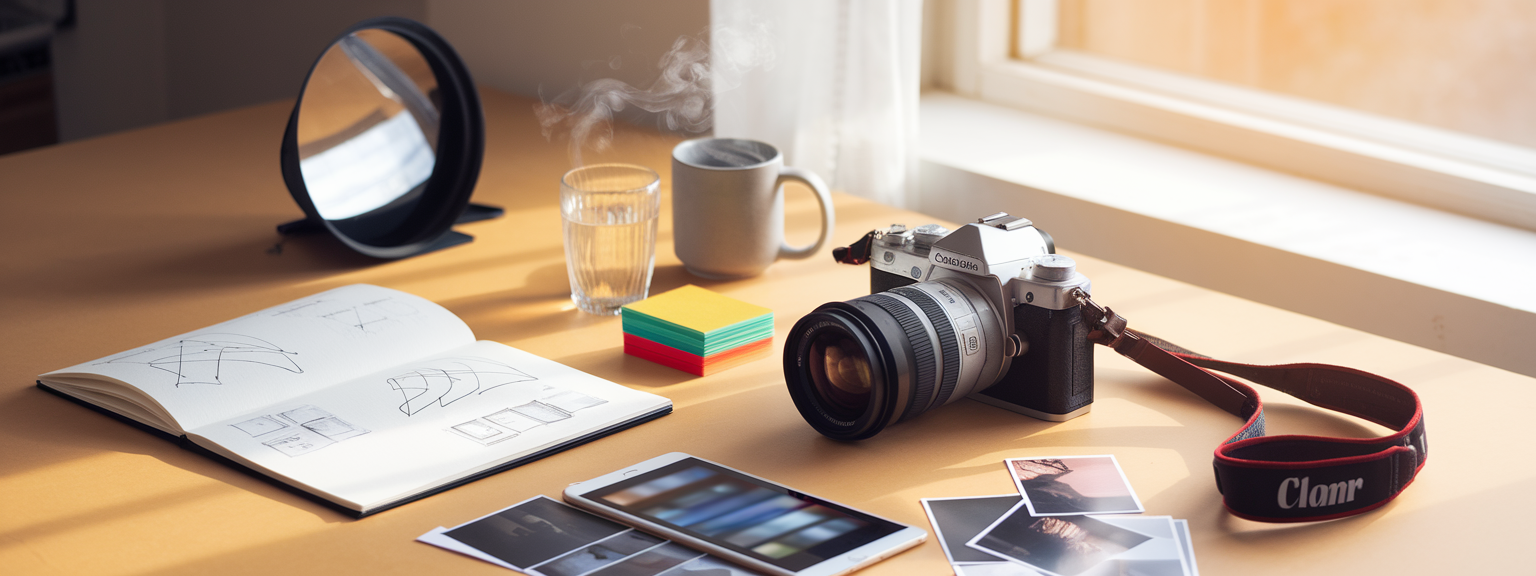
Assemble a small kit with a pocket notebook, three index-card prompts, a compact reflector, a single prime lens, and a list of micro-actions. This kit lowers activation energy and increases the odds of capturing ideas during commutes or quick breaks.
Tip 4 — Use Daily Inspiration Sources
Diversify input: street scenes, nature, household still life, archival photos, and magazines. Use social platforms for inspiration only; avoid direct copying. Tag why each source inspires you to preserve the kernel of originality for future projects.
Tip 5 — Daily Creative Prompts Bank (Select)
Maintain a rotating bank of prompts to pull from during your inspiration routine. Examples include: high-contrast black & white, reflections in puddles, negative space portraits, macro textures, and motion blur commuters. Use these prompts to jumpstart morning shoots and sustain idea generation.
Tip 6 — Use Technology Wisely (Without Losing Your Eye)
Use mobile reminders for prompts, voice memos for quick ideas, and lightweight RAW capture apps. Tools like Lightroom Mobile support quick edits and tagging. AI tools can assist with organization and ideation; however, maintain human judgment for composition and ethics.
Tip 7 — Make a Habit with Tiny Rituals
Anchor the inspiration routine to an existing habit, such as after morning coffee. Track streaks to encourage continuity. Small, consistent wins compound into significant creative output over weeks and months.
Tip 8 — Experiment with Idea Generation Techniques
Apply SCAMPER (Substitute, Combine, Adapt, Modify, Put to another use, Eliminate, Reverse) and mind mapping to expand single-image ideas into series. For example, substitute the subject, combine two prompts, or reverse the expected framing.
📸 Sample Scenario
Case Study: “Morning Rituals” — From Prompt to Campaign
Scenario: Anna, a freelance photographer, had one week to prepare a campaign pitch for a boutique coffee roaster. She used the creative inspiration daily routine to produce both concept and deliverables.
Day-by-Day Process
- Day 1 — Prompt selection: “Everyday ritual (morning coffee)” with constraint “natural window light.”
- Day 2 — Focused exploration: macro textures (steam, foam) and hands; tagged images for reuse.
- Day 3 — Creative stretch: produced three edits per image and created mock social templates.
- Day 4 — Pitch: assembled a concise PDF with visuals, deliverables, and pricing.
Outcome and Lessons
The client commissioned the mini-campaign. Anna reused alternate edits for content scheduling, and the cohesive look generated by daily constraints made the pitch persuasive. This sample demonstrates how consistent, constrained practice converts creative inspiration daily into client-ready work.
✅ Key Do’s for Effective Usage
Core Actions
- Do set a fixed, short daily window — consistency matters more than duration.
- Do use constraints to focus and accelerate idea generation.
- Do document process: tag images, write short notes, and build an idea bank.
- Do rotate prompts and mediums to avoid stagnation and support idea generation.
- Do share selected work with peers for feedback and fresh perspectives.
- Do archive and back up daily work — your idea bank is valuable content.
- Do use micro-actions to convert inspiration into tangible next steps.
❌ Common Mistakes to Avoid
Frequent Pitfalls
- Waiting for “perfect” inspiration — instead, use daily prompts to force the session.
- Over-editing immediately — flag first, edit later to reduce decision fatigue.
- Copying direct inspiration — extract elements and recombine rather than imitate.
- No tagging or archive — maintain a minimal taxonomy: Prompt, Emotion, Location, Technique.
- Always using the same gear — rotate lenses, film, or settings to create variety.
- Ignoring consent in public portraits — secure releases and respect privacy.
- Treating the routine as a chore — gamify it or swap prompts with a friend.
🔄 Troubleshooting & FAQs
Q: How do I start when I have zero time in the morning?
A: Reduce the routine to five minutes: pick a prompt, take one photo on your commute or during a break, and jot a one-line idea. Frequency is more important than duration. Use phone reminders and keep a compact lens or your phone accessible.
Q: What if I feel creatively blocked despite doing the routine?
A: Change stimulus: try a new neighborhood, a different time of day, or a non-photo prompt such as a poem or song. Use constraints like “only shoot reflections” or take a deliberate micro-break — a short, camera-free walk — to reset your visual appetite.
Q: How do I turn daily shots into a project or portfolio?
A: After 2–4 weeks, identify recurring motifs. Group images by theme, mood, or palette. Edit to a consistent aesthetic and sequence 10–20 images into a narrative arc. Tags from your idea bank will speed retrieval and assembly.
Q: How should I store and tag images for an idea bank?
A: Use a simple tag set: Prompt_Name, Emotion, Location, Technique. Use folder names like /CreativeInspirationDaily/YYYY-MM-DD_Prompt for immediate context. Tools such as Adobe Lightroom or Google Photos can automate some tagging while preserving searchable metadata.
Q: I’m worried about copying when I collect inspiration — how to avoid it?
A: For each inspirational image, write why it inspires you — color, mood, composition. Then create at least three variations: different subject, light, or framing. This practice turns influence into a starting scaffold rather than a blueprint.
Q: What are the best AI tools for productivity?
A: AI helps with organization, tagging, ideation, and caption drafting. Recommended categories include:
- Image organization & tagging: Adobe Lightroom with AI smart tagging; Excire Foto.
- Quick edits & variations: Luminar Neo; Photoshop Generative Fill (use cautiously).
- Idea generation & moodboarding: Midjourney or DALL·E for thumbnails (use for brainstorming; disclose if used in client work).
- Caption & scheduling: Jasper, ChatGPT, Buffer, Later.
- Automation: Notion templates and Zapier for moving flagged images into folders or creating reminders.
Use AI to speed routine tasks but retain human judgment for composition, ethics, and final creative choices.
Q: How do I keep the quality high while doing this daily?
A: Quality arises from iteration and a disciplined edit process. Shoot liberally, flag selectively, and refine weekly. Ask three evaluative questions: does it communicate? is the light compelling? is the composition resolved? Use peer critique to sharpen choices.
Q: What if my gear is limited?
A: Limitations are creative catalysts. Use a single prime or phone camera. Focus on composition, light, and storytelling. Accessible techniques include phone macro, silhouette against strong backlight, and handheld panning for motion.
Q: How can I use daily prompts in a classroom or workshop?
A: Assign a daily prompt for warm-up and require a one-minute rationale. Combine quick peer critiques with a final project assembled from the best five prompts. This approach trains rapid ideation and applied critique.
Q: How do I optimize content for voice search and SEO?
A: Use conversational FAQs with direct answers. Include long-tail phrases such as “how to find creative inspiration daily” and “daily creative prompts for photographers.” Provide descriptive image alt text and structured data for FAQs where possible.
Q: My inspiration works some days but not others — what troubleshooting steps should I take?
A: Log context variables: sleep, mood, time, and prior activity to find patterns. If evening schedules reduce morning creativity, shift your routine. If mood varies, prioritize low-stakes play sessions instead of output-focused shoots.
Q: Are there ethical concerns when using daily inspiration sources, especially online images?
A: Yes. Use other photographers’ images for study only and never reproduce or publish derivative works without permission. Disclose AI contributions if they materially affect final images and obtain model releases for commercial portraits. Ethical practice protects your reputation and creative integrity.
🖼️ Bringing It All Together
Synthesis
Creative inspiration daily is a structured framework that transforms irregular sparks into a dependable creative system. By following concise steps — warm-ups, constraints, focused capture, and immediate archiving — you cultivate a routine that reliably produces ideas and assets. Use the approaches in this guide to support portfolio growth, client deliverables, classroom lessons, or personal well-being.
Final checklist: choose a 20–60 minute daily window, assemble a tiny kit (camera or phone, notebook, single lens), pick or shuffle a prompt, run the eight-step routine, tag results, and schedule one micro-action. Over time, this habit becomes a reliable source of ideas and projects.
Image alt text recommendations: use descriptive phrases that include keywords such as “creative inspiration daily — morning photo walk idea generation with natural light” and “daily creative prompts — negative space portrait inspiration routine.” These optimized descriptions help search engines and improve discoverability for photographers seeking to build an inspiration routine.
![[Photographer capturing sunrise over coastal cliffs with camera — travel photography tips in practice]](https://lenslesson.com/wp-content/uploads/2025/12/travel-photography-tips-sunrise-cliffs-camera.png "[Travel Photography Tips Sunrise Shot]")
![[Person taking an outdoor portrait demonstrating Quick Photo Tips]](https://lenslesson.com/wp-content/uploads/2025/12/quick-photo-tips-better-photos.png "[quick-photo-tips-outdoor-portrait]")
![[Photographer capturing candid subjects at a busy city crosswalk for street photography]](https://lenslesson.com/wp-content/uploads/2025/12/street-photography-candid-crosswalk-urban.png "[Street Photography Crosswalk]")
![[Photographer using high shutter speed to capture an athlete mid-jump in sharp action shots with a blurred background]](https://lenslesson.com/wp-content/uploads/2025/12/action-shots-pro-tips-freeze-motion.png "[Action Shots Athlete Mid-Jump]")
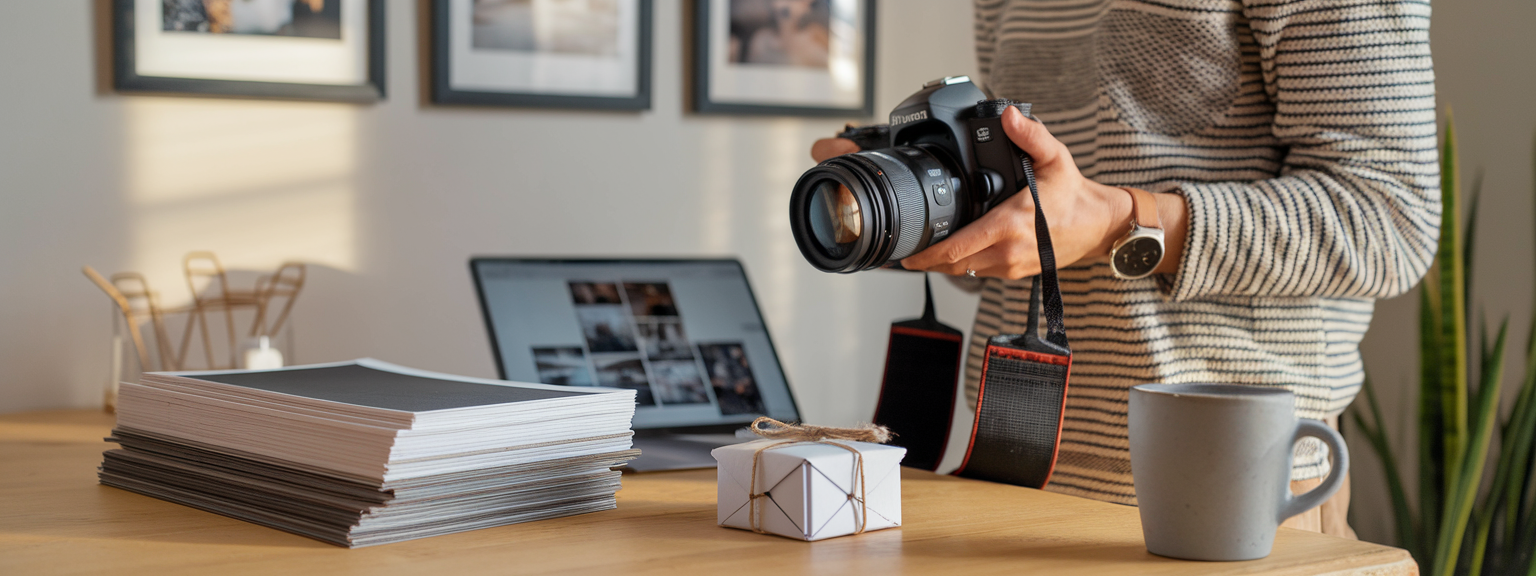
![[Flat-lay of must-have photography gear including camera, lenses, tripod, camera bag, and lighting accessories]](https://lenslesson.com/wp-content/uploads/2025/12/must-have-photography-gear-flatlay.png "[Must-Have Photography Gear Flatlay]")
![[Close-up of a ladybug on a leaf showcasing macro photography detail and texture]](https://lenslesson.com/wp-content/uploads/2025/12/macro-photography-ladybug-close-up.png "[ladybug-macro-photography]")